

Choosing a hotel can shape an entire visit. The right property reduces travel time, supports restful nights, and places useful experiences close at hand. The wrong one can introduce daily friction through an inconvenient location, unclear parking, poor room fit, or amenities that do not match the traveler’s needs.
St. Louis makes the decision especially interesting because its attractions and neighborhoods are spread across several distinct areas. A visitor may plan time around downtown landmarks, baseball, museums, gardens, restaurants, music, or historic districts. Rather than choosing a property from a citywide list, travelers can make a stronger decision by matching the hotel to the purpose and rhythm of the trip.
Start with the Purpose of the Trip
The first question is not “Which hotel is best?” but “What does this trip require?” A business traveler attending meetings downtown may prioritize efficient transportation, a workspace, reliable internet, and a predictable arrival. A couple on a weekend break may prefer atmosphere, nearby dining, and a quieter setting. Families might need flexible bedding, storage, breakfast options, and simple parking.
List the activities that are fixed before considering hotel style. Concerts, games, reservations, conferences, and timed museum visits create geographic anchors. Then identify the periods that remain open. Those unplanned mornings and evenings often determine whether a lively district, residential neighborhood, or full-service hotel will feel most rewarding.
Choose a Neighborhood, Not Just a Pin
A map can show distance, but it cannot fully describe the experience outside the front door. Downtown may suit travelers who want major attractions and event venues nearby. Other districts can offer restaurants, parks, historic streets, or a more residential pace. The best location is the one that supports both the scheduled itinerary and the atmosphere the traveler wants between activities.
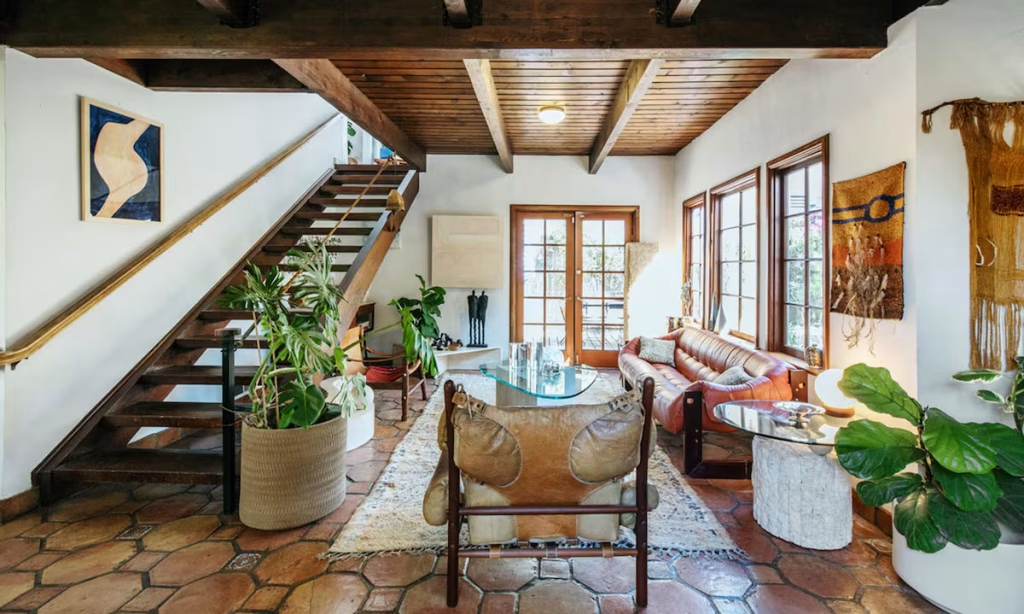
A search for hotel St. Louis options should therefore include neighborhood context, not only nightly rates. The Truitt illustrates this approach through its setting near Lafayette Park in historic Lafayette Square. Its restored residential architecture, individual rooms, gardens, and proximity to neighborhood dining offer a different base from a conventional downtown tower while keeping major city attractions within the broader itinerary.
Map the Hotel to the Daily Itinerary
Create a simple day-by-day map before booking. If most activities cluster in one area, staying nearby may save time and transportation costs. If plans span the Gateway Arch, City Museum, Busch Stadium, the Missouri Botanical Garden, and Forest Park, no single address will place everything at the doorstep. In that case, convenient road access, parking, rideshare availability, or proximity to transit may matter more than being beside one attraction.
Think about the return journey as well as the departure. A location that feels convenient in the morning may be less appealing late at night if dining options close early or transportation becomes limited. Travelers who enjoy walking should examine the immediate blocks, street crossings, terrain, and evening environment rather than relying on a broad “walkable” label.
Decide Between a Large Hotel and a Boutique Stay
Large hotels usually provide familiar operations and a wide range of services. Guests may find staffed desks, elevators, meeting spaces, restaurants, gyms, and standardized room categories. This can be reassuring for conferences, groups, families, and travelers who expect help at any hour.
Boutique properties offer a different advantage: character and a closer relationship to their building or neighborhood. Rooms may vary in layout, and common areas may feel more residential. Service can be personal, but facilities and staffing may be more limited. Neither model is automatically better. The choice depends on whether the guest values extensive infrastructure or a more individual sense of place.
Inspect the Specific Room Category
Hotel galleries often highlight the most dramatic room, not necessarily the one available at the advertised rate. Open the details for the exact category being booked. Confirm the bed configuration, room size, bathroom type, windows, seating, storage, accessibility, and maximum occupancy. In historic buildings, layouts can vary substantially even within the same general price range.
Travelers sensitive to noise should ask whether the room faces a street, garden, stairway, elevator, or common area. Light sleepers may also want to know about blackout coverings and quiet hours. Guests with mobility requirements should confirm entrances, stairs, elevators, doorway widths, and bathroom features directly rather than drawing conclusions from photographs.
Check the Amenities You Will Actually Use
A long amenities list can be less valuable than a short list that matches the trip. Reliable Wi-Fi, in-room coffee, bottled water, quality linens, useful bath products, a hair dryer, and an iron or steamer can improve an ordinary day. Gardens, art, or attractive shared spaces may matter to guests who expect time at the hotel.
Other travelers need breakfast, a fitness centre, room service, a business centre, laundry, a refrigerator, or daily housekeeping. Verify whether each priority is included, available on request, shared, or offered for an additional fee. “Luxury,” “boutique,” and “full service” do not guarantee the same facilities at every property.
Understand Arrival, Parking, and Access
Arrival logistics deserve attention before the reservation is final. Ask where guests park, whether spaces are guaranteed, what parking costs, and how luggage reaches the room. If arrival will be late, confirm check-in hours and the procedure for entering the property. Small hotels may use scheduled or contactless arrival processes, while large hotels may have a staffed desk throughout the night.
The same planning applies to departure. Review checkout time, luggage storage, vehicle access, and the options available if a flight or train leaves later in the day. Clear procedures can make the final hours feel relaxed rather than rushed.
Read Policies Before Comparing Prices
The lowest displayed rate may not be the lowest final cost. Compare taxes, parking, destination fees, breakfast, and other required charges. Then review cancellation deadlines, prepayment terms, deposits, incidental holds, minimum stays, and rules for changing dates. A slightly higher flexible rate can be worthwhile when plans are uncertain.
Travelers should also confirm policies for children, additional guests, pets, smoking, visitors, and special events. Boutique properties located in historic homes may have operating rules designed to protect the building and maintain a quiet environment. Those rules can be a benefit when they match the desired stay and a frustration when discovered too late.
Use Reviews as Pattern Recognition
Recent reviews are most helpful when read for repeated themes. Several comments about comfortable beds, responsive communication, or convenient parking carry more weight than a single enthusiastic sentence. The same applies to concerns involving noise, cleanliness, maintenance, or confusing access.
Consider whether the reviewer’s priorities resemble your own. A lively neighborhood may delight one guest and bother another. A small hotel’s privacy may feel peaceful to a couple but inconvenient to someone expecting constant service. Reviews are evidence about fit, not a universal verdict.
Build a Shortlist That Reflects the Trip
Reduce the field to three properties and compare them against the same criteria: location, room suitability, required amenities, parking or transportation, cancellation flexibility, and complete cost. Add one subjective criterion, such as design, neighborhood atmosphere, or level of service. This keeps the comparison grounded while allowing room for preference.
Contact the property when an unanswered question could materially affect the stay. A short exchange about access, room placement, or parking can prevent a costly mismatch. It can also reveal how clearly and promptly the hotel communicates.
The Best Hotel Supports the Experience
There is no single hotel that is right for every St. Louis visit. The strongest choice fits the itinerary, the people traveling, and the pace they want. For some guests, that means a large downtown property with extensive services. For others, it means a smaller historic stay connected to a neighborhood.
By choosing the location first, examining the actual room, confirming essential amenities, and reading the policies before paying, travelers can move beyond attractive photographs and broad labels. The right hotel should make the city easier to experience and give each day a comfortable place to begin and end.