


(NIT photo)
The following is a legislative update from Republican State Rep. Shannon Latham, representing portions of Franklin, Hamilton, Story and Wright counties in Iowa House District 55:
A Week of Remembrance and Action
Week 4 of the 2025 legislative session began on a solemn note as Brigadier General (Retired) and Iowa Representative Martin L. Graber passed away suddenly on Jan. 31, 2025, at Fort Madison in southeast Iowa. He was laid to rest on Tuesday, so no Iowa House subcommittee or committee meetings were held on Feb. 4.
Several constituents in House District 55 have contacted me about Pharmacy Benefit Manager (PBM) Reform and State Supplemental Aid (SSA) for schools, so I will provide an update on each of these issues at the end of this article.
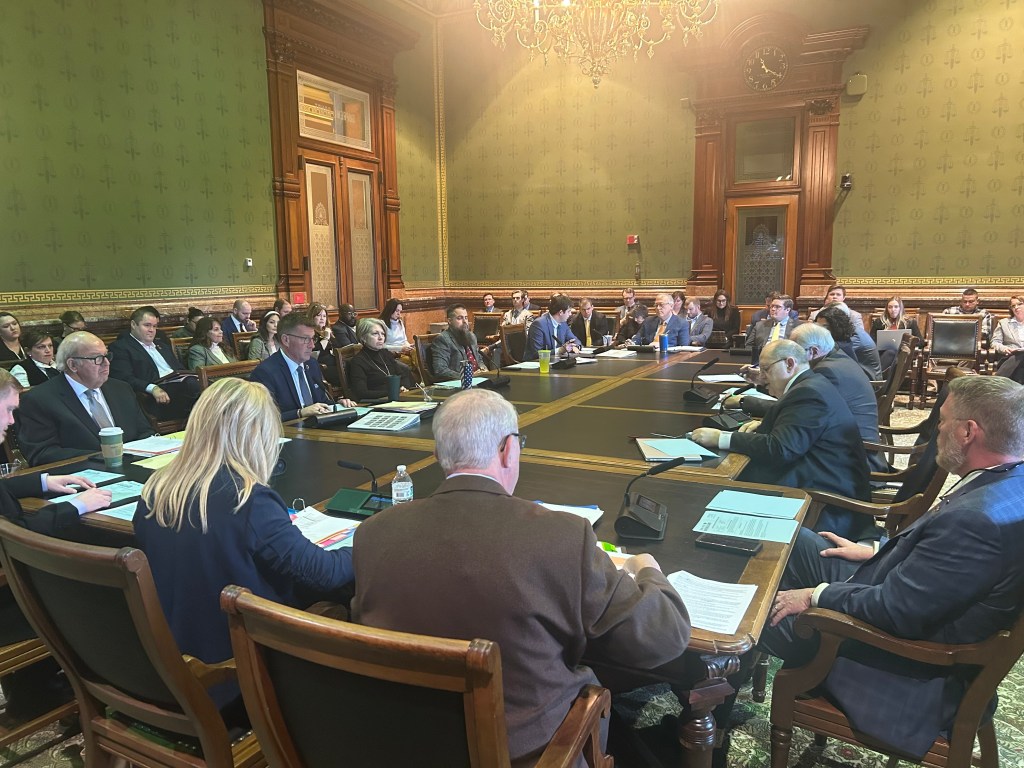
On Wednesday, Feb. 5, I chaired two subcommittees for bills making their way through the law-making process:
· HF 7, a bill for an act providing for the regulation of delivery network companies and drivers, making penalties applicable.
· HSB 100, a bill for an act relating to cost-sharing requirements for supplemental and diagnostic breast examinations.
House Study Bill 100 eliminates the cost-sharing burden on screening and diagnosis of breast cancer for women who need an MRI in addition to an annual screening mammogram, including: breast cancer survivors, sister/daughter of a breast cancer survivor, chest radiation treatment, or someone with a lifetime risk greater than 20%. It also applies to patients with other imaging needs due to extremely dense breast tissue and heterogeneously dense breast tissue.
The earlier cancer is diagnosed, the better a patient’s prognosis. Plus, prevention costs less than detection followed by treatment. Consider these costs for treatment by stage:
· Stage I/II $97,066
· Stage III $159,442
· Stage IV $182,655
The copay alone is staggering, so it’s no wonder 27 states have laws in place for no copay and deductible for supplemental and diagnostic imaging. Hopefully, Iowa will join this list soon! After HSB 100 passed through subcommittee, the Commerce Committee passed it Thursday. Next, HSB 100 moves to the floor as a committee bill.
Also on Thursday, the Iowa House of Representatives passed four joint resolutions pertaining to basic procedures of the House and the Senate:
1. HCR 4 – Comprises joint rules governing lobbyists for the 91st General Assembly.
2. HCR 5 – Outlines joint rules for House and Senate for the 91st General Assembly.
3. HR 4 – House Code of Ethics for the 91st General Assembly.
4. HR 5 – Defines the permanent rules for the Iowa House of Representatives for the 91st General Assembly.
Pharmacy Benefit Manager (PBM) Reform
Independent pharmacies in rural areas are closing at an alarming rate due to unfair pricing practices by Pharmacy Benefit Managers (PBM). Twenty-nine Iowa pharmacies closed in 2024! More than 150 pharmacies have closed during the past decade. Without local pharmacies, Iowa families and older Iowans have a hard time accessing the care they need and deserve.
House Study Bill (HSB 99) includes eight new additional regulations on PBM’s in Iowa:
1. Prohibits a PBM or insurer from discriminating against a pharmacy if the pharmacy is acting within its license and all laws.
2. Prohibits the removal of pharmacy choice or imposing any monetary advantages or penalties that result in removing pharmacy choice, including unnecessary specialty drug designations and requiring use of mail order pharmacies.
3. Prohibits additional cost-sharing on the insured based on where they choose to have their prescription filled.
4. Requires all rebates to benefit the insured.
5. Requires any amount paid by the insured for the prescription drug to be applied to their deductible.
6. Requires PBMs to reimburse pharmacies based on acquisition cost.
7. Prohibits spread pricing unless all cost differential is provided to the insured.
8. Requires pharmacies have an appeals process if not reimbursed at acquisition cost.
This bill passed subcommittee in the House this week, however, it’s not in its final form. I expect more work will be done to this bill before it’s considered by the House Commerce Committee on which I serve.
House Republicans’ SSA proposal:
The Governor and the Iowa Senate have both proposed a 2% increase in State Supplemental Aid (SSA) funding for education for the upcoming fiscal year. However, Iowa House Republicans introduced our own proposal.
House Republicans’ proposal for SSA entails:
· An increase of 2.25% in SSA funding. This increase, plus the second phase of the teacher salary increase passed last session, results in $114.5 million more for public schools.
· A one-time increase of 0.6% SSA payment which equates to $22.6 million more for schools.
· A $10 increase in per pupil equity equates to a $5.8 million increase.
· An increase in the Operational Sharing Budget from 21 to 25, providing an additional $1 million to schools.
· Increasing School Transportation to cap the cost of transportation for each school district at the statewide average of $430, resulting in $5.8 million in additional funds.
Altogether, these increases equate to a 3.93% increase in state funding to public schools. The new state cost per pupil under this proposal would be $8,039 per pupil, which includes $27 per student for the .6% increase.
These increases represent the many specific funding issues our school districts have brought to our attention. While each line item may not affect each individual school district equally, one line item may have a big impact to address a specific district’s specific issue.

6 thoughts on “Rep. Shannon Latham says House Republicans want to increase school funding by 2.25%”
You give public schools 2.25%. The total cost of vouchers to the state for this school year will be $218,079,316. That’s roughly a 70 percent increase in spending for private schools from last year.
So..what would happen if the public schools got it?
They would put it to use educating all children, not just a select few.
Have you seen the numbers of grade reading levels? Is that a guaranteed improvement?
I have seen them and improvement is needed. Have you seen the scores for private schools that we are paying to educate our kids?
Private school students in Iowa tend to perform well on standardized math tests, and some private schools in Iowa have shown particularly strong results.
In Iowa, private schools generally have strong reading scores compared to public schools, with many implementing rigorous reading programs to ensure students are reading at grade level, particularly in the early grades (K-3), often utilizing standardized testing to track progress;