



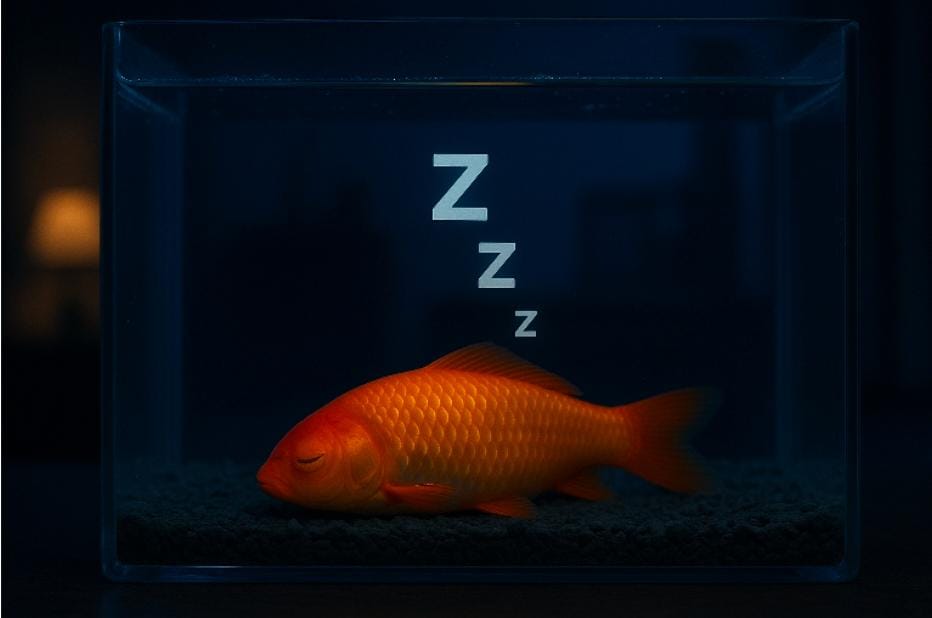
Goldfish are cherished for their vibrant colors and elegant movements, but many pet owners overlook a crucial aspect of their care—sleep. Unlike humans, goldfish don’t have eyelids or cozy beds, making their rest easy to miss. However, understanding their unique sleep patterns is essential for ensuring their health, longevity, and overall well-being. By learning how and when goldfish rest, you can create an environment that supports their natural rhythms, reduces stress, and helps them thrive.
In this article, we will wade into the river of the science of goldfish, focusing on do goldfish sleep, and find out whether they sleep or remain on the wake in the entire 24 hours.
Understanding the Sleep-Wake Cycle in Goldfish
All animals possess a well-defined sleep-wreath cycle, and goldfish are no exception. While the sleep culture of a goldfish is less elaborate than that of a mammal or a bird, they still have alternating periods of rest and movement that can be monitored.
Goldfish have no eyelids; their eyes cannot even be put into a closed position, which sometimes leads people to conclude that goldfish do not sleep. However, science has come up with several indicators for goldfish sleeping patterns, which include the following.
- Lowered activity levels and move rates
- Lowered reactions to stimuli
- Swimming actively and purposefully differs from the typical behavior of goldfish, which involves sitting still or swimming slowly.
- Reduced use of gill and fin movements supporting these observations that the fish is in a less active mode
By observing these behaviors, pet owners and researchers can gain a better understanding of when goldfish are in a sleep-like state and when they are actively awake and engaged.
Do Goldfish Sleep or Stay Awake?
Research on goldfish suggested that these fish have a well-defined rest-activity cycle, being active during the daylight period and quiescent during the night. They possess no doubt about the experience of sleep but even more, some patterns resembling the sleep in bacon gibberish, as my mother used to put it, do exist.
There are a number of factors that can affect how long a goldfish stays in a state that could be compared to sleep, and the quality of this also includes water temperature, light, and even the presence of some other species or even stress factors. That knowledge will help in coming up with the conditions upon which your goldfish rest and recover.
Sleeping Behaviors Observed in Goldfish
When observing goldfish in their aquarium or pond, you may notice a range of behaviors indicating they are sleep-like. These behaviors can include:
- Resting Still: Goldfish may be still in the water, hovering without using much of their fins or gills. People tend to think of this as having habits just before sleep.
- Gentle Swimming: goldfish, when swimming, do so gently and in curls or lazy circles as they can be seen hanging or staying simply in one position in the water.
- Unresponsiveness: When in a sleeping state, goldfish may show little or no response to stimuli like moving objects or bright lights.
- Low Activity in the Fins and Gills: The movements of the fin and gill in goldfish can also be calm and have less activity when the fish is more restful.
- Hiding or Seeking Shelter: As goldfish do, some of them may search for hideouts, or the shaded portions of the aquarium where there is less light, as though they were searching for resting, sleep-like shelter.
It’s important to note that other factors, such as stress, illness, or the presence of predators, can also influence these behaviors. Carefully observing your goldfish’s behavior over time can help you distinguish between normal sleep-like behaviors and any potential health or environmental concerns.
Factors that May Affect Goldfish Sleep Patterns
Goldfish sleep patterns can be influenced by a variety of environmental and physiological factors. Understanding these factors can help you create an optimal sleep environment for your goldfish and ensure their overall well-being.
- Water Temperature: As warm-blooded creatures, goldfish adapt to the water temperature rather than maintaining constant body temperatures. Large activity and less inert-like behaviors are associated with warmer temperatures, whereas low levels of activity are to be expected when the temperature is much lower.
- Lighting Conditions: Goldfish are also subject to day and night cycles just like most aquatic animals. When constraints are placed on the amount of light received or excessive light enhancement takes place there tends to be less time spent resting.
- Presence of Predators or Stressors: The presence of predators or aggressive tank mates leads to what is called an ‘alert’ posture and, therefore, does not allow a goldfish to assume a sleep-like state. A goldfish isn’t well under a load of stress since stress also affects its sleep.
- Age and Life Stage: It is said that older goldfish tend to sleep differently than younger ones. Younger goldfish are thought to sleep differently than older ones. Juvenile goldfish may also need to rest and recuperate often while they grow.
- Water Quality: High ammonia, nitrites or nitrates concentration is unhealthy for the goldfish and would create some tension causing their sleep-wake pattern to be disturbed almost to a fiasco.
By understanding these factors and making adjustments to your goldfish’s environment, you can create a more conducive sleep environment and support their overall health and well-being.
The Importance of Providing a Suitable Sleep Environment for Goldfish
Ensuring that your goldfish have a suitable sleep environment is crucial for their overall health and longevity. Just as humans require a comfortable and restful sleeping space, goldfish also benefit from an environment that promotes adequate rest and recovery.
When goldfish are unable to experience proper sleep-like behavior, they may become more susceptible to stress, illness, and even premature death. Providing a suitable sleep environment can help:
- Relieve Stress: Stress levels during the day can be lowered by providing an aquarium/ pond that has proper lighting, water standards, and hide outs for the goldfish.
- Enhance Immune Response: Sleeping and resting periods can help recover the goldfish from such treatments, and this, in turn, helps to enhance their defenses against pathogens.
- Allow Correct Size and Body Characteristics: To cut the long story short, adequate recuperation periods, i.e. ample sleep, positively impacts on the health growth pattern of fish and more so the young fish.
- Promote Sleep and Other Daily Behaviors: One way of achieving this is to set up aquariums that are as close as possible to the natural habitat of the goldfish.
- Improve General Health: A power-rested goldfish residing in a conducive place is fairly likely to shine in its color, swim/play, and perform other activities that depict good health and happiness.
How to Create a Conducive Sleep Environment for Your Goldfish
Whatever the situation, creating a conducive sleep environment for your goldfish involves water, lights, and understanding how to arrange an aquarium or a pond. Attention to such aspects will ensure that your goldfish has the most favorable conditions for sleep and recuperation.
- Keep The Water Clean And Clear: The quality of the water that your goldfish is using has to be clear, filtered, and warm or cool enough for the fish. Repeated shifts in water and analysis of water conditions can easily bring about the relief of stress.
- Simulate Day-Night Cycles For Them: It is helpful to reduce the brightness of the aquarium lights at the specified times of the day for preparation rather than at night. This may encourage your goldfish to go for an afternoon nap.
- Provide Plenty Of Places To Escape: Include plants, decorations, or other items that allow your goldfish to rest and hide from other creatures. This will make them feel safer and healthier through their sleep-like periods.
- Reduce The Noise_Sound And Or Vibration: Eliminate noise, shaking and any disturbances which could be in the vicinity of the aquarium/pond where your goldfish rest.
- Monitor and Adjust as Necessary: Watch how your goldfish behaves and change things in their environment that might disrupt their ability to take enough rest and recuperate.
By following these guidelines, you can create a sleep-friendly environment that supports the overall health and well-being of your beloved goldfish.
Signs of a Healthy and Well-Rested Goldfish
Recognizing the signs of a healthy and well-rested goldfish can help you ensure that your aquatic companions are thriving in their environment. Some key indicators of a well-rested goldfish include:
- Bright Body Color: It is normal for a goldfish that has been resting well to glow in attractive vibrant colors that stand out unlike when they are stressed.
- Energetic Swimming: Observations demonstrate that adequately rested goldfish engage in active movements, including abused/ graceful swimming, and move around the enclosure with energy.
- Responsiveness: Properly rested goldfish will show responsiveness in their behavior, including feeding cues, which are commonly triggered by movement within the aquarium and other factors.
- Normal Hunger Level: Rested bees can be seen eating food offered to them with enthusiasm.
- Enhanced Growth and Development: Goldfish that are given proper rest and recovery will grow well both in structure and appearance.
- Minimal Stress Behaviors: Aside from performing essential tasks, goldfish that are given ample rest will also exhibit lesser stress behaviors such as abnormal swimming patterns, excessive hiding, or clamping of the fins.
By observing these signs, you can gain valuable insights into the overall health and well-being of your goldfish, and make any necessary adjustments to their environment to ensure they are receiving the rest they need.
Common Misconceptions About Goldfish Sleep
Despite the growing understanding of goldfish sleep patterns, there are still several common misconceptions that persist among pet owners and the general public. It’s important to address these misconceptions to help promote a better understanding of the unique sleep requirements of goldfish.
- “Goldfish Don’t Sleep”: As we’ve explored, goldfish do exhibit sleep-like behaviors, even if they don’t experience sleep in the same way as mammals or birds.
- “Goldfish Sleep with Their Eyes Open”: Goldfish, like many other fish, do not have eyelids and cannot close their eyes. Their lack of visible eye closure does not mean they are not experiencing a sleep-like state.
- “Goldfish Sleep All the Time”: Goldfish, like most living organisms, have periods of activity and rest. While they may spend more time in a sleep-like state compared to some other pets, they do not sleep continuously throughout the day and night.
- “Goldfish Don’t Need a Proper Sleep Environment”: As we’ve discussed, providing a suitable sleep environment is crucial for the overall health and well-being of goldfish. Neglecting this aspect can lead to stress, illness, and other problems.
- “Goldfish Sleep Patterns Don’t Matter”: Understanding and respecting the sleep patterns of goldfish can have a significant impact on their longevity, growth, and overall quality of life.
By addressing these misconceptions and promoting a better understanding of goldfish sleep, you can become a more informed and responsible pet owner, ensuring your goldfish receive the care and attention they deserve.
Conclusion
To summarize, this interesting and secret world of goldfish revolves around the biology of sleep, which is quite different in each of these animals. Instead of going to deep sleep as most mammals and people do, goldfish have active periods followed by rare periods of rest, though their relaxing behavior may not necessarily meet the common definition of sleep. Also, visit The Goldfish Tank to learn more about sleeping patterns.