



In the world of aerospace and defense, precision and reliability are paramount. Behind the scenes of every successful military operation or aerospace mission lies a complex network of technology that ensures every system functions seamlessly. At the heart of this technological web is the mission computer—a powerful processing system that plays a critical role in the execution of sophisticated tasks, from navigation to weapons control.
A mission computer isn’t your typical desktop or laptop. These machines are engineered for high-stakes environments where failure is not an option. In aircraft, naval ships, ground vehicles, and even spacecraft, mission computers gather and process vast amounts of data in real-time, ensuring that pilots, commanders, and operators can make informed decisions quickly. As military and aerospace technologies become more advanced, the demand for high-performing mission computers continues to grow, transforming the way complex missions are carried out.
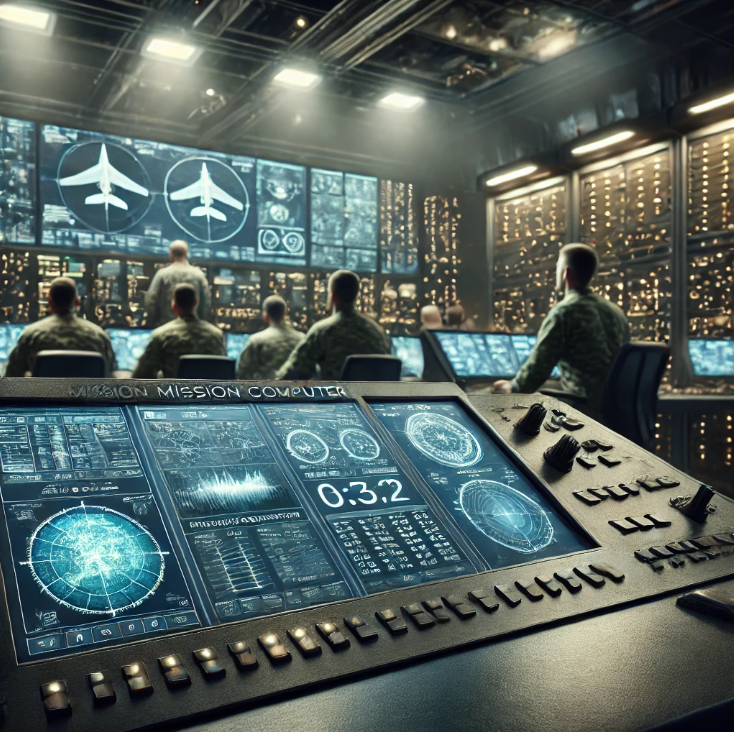
What is a Mission Computer?
A mission computer is a rugged, high-performance computing system specifically designed to meet the demanding needs of military, aerospace, and defense applications. Unlike commercial computers, which are built for general use, mission computers are engineered to withstand harsh environmental conditions—extreme temperatures, vibrations, and even electromagnetic interference. They are designed to be durable and reliable, capable of operating in environments where other computers would fail.
Mission computers are used to process and manage a variety of critical tasks, including:
- Flight Control: In modern aircraft, the mission computer is responsible for processing data from various sensors, adjusting flight dynamics, and ensuring smooth operation under all conditions.
- Weapons Systems: Mission computers manage and control weapons deployment, calculating trajectories and ensuring precision targeting.
- Navigation: Accurate navigation is crucial in military operations, and mission computers integrate data from GPS, inertial navigation systems, and other sources to provide real-time positioning and routing.
- Surveillance and Reconnaissance: For missions involving intelligence gathering, mission computers process live data from radar, cameras, and sensors, providing operators with up-to-date situational awareness.
With such a wide array of responsibilities, mission computers are an essential component of military operations and aerospace missions.
Key Features of Mission Computers
Given their crucial role, mission computers must meet several stringent requirements. These systems need to be fast, durable, and capable of handling vast amounts of data under extreme conditions. Here are some of the key features that define a mission computer:
1. Ruggedization
Mission computers are typically housed in rugged enclosures designed to protect sensitive internal components from external stressors. These computers are often mounted in aircraft, ships, or armored vehicles, and they need to operate in environments that include high altitudes, sub-zero temperatures, and intense vibrations. Rugged mission computers are built to military standards (MIL-STD) for durability, ensuring they continue to function in extreme conditions where commercial-grade systems would fail.
2. High-Performance Processing
Military and aerospace missions generate massive amounts of data, from sensor inputs to communications streams. A mission computer needs to process this data in real-time, allowing operators to make quick, informed decisions. Modern mission computers are equipped with powerful processors capable of handling multiple tasks simultaneously without sacrificing speed or accuracy.
3. Data Security
Given the sensitive nature of military operations, data security is a top priority. Mission computers incorporate encryption and secure communications protocols to prevent unauthorized access or tampering. Cybersecurity is a major concern in modern warfare, and mission computers are built with defense mechanisms to protect classified information and prevent hacking attempts.
4. Modularity and Upgradability
Aerospace and defense technologies evolve rapidly, and mission computers need to keep pace. Many systems are designed with modularity in mind, meaning they can be easily upgraded with new hardware or software without needing to replace the entire system. This ensures that mission computers remain operational and compatible with new technologies as they emerge.
5. Real-Time Decision Making
Perhaps the most important feature of mission computers is their ability to process and analyze data in real-time. Whether it’s calculating flight paths, monitoring engine performance, or tracking enemy movements, mission computers must deliver instantaneous results. Delays in data processing could lead to mission failure, making speed and accuracy critical components of any mission computer system.
These features make mission computers indispensable tools in high-stakes environments where split-second decisions can determine the success or failure of an operation.
The Evolution of Mission Computers
Mission computers have come a long way from their early incarnations. In the mid-20th century, when the first computer systems were integrated into military aircraft, these machines were bulky, slow, and limited in functionality. However, as technology advanced, so did the capabilities of mission computers. Today, they are highly sophisticated systems that can handle complex algorithms, AI, and advanced data analytics.
One of the most significant developments in mission computers is their integration with artificial intelligence (AI) and machine learning (ML). AI has allowed mission computers to become more autonomous, capable of analyzing data and making decisions without constant human input. In unmanned aerial vehicles (UAVs) and autonomous weapons systems, AI-powered mission computers can adapt to changing environments, identify targets, and carry out complex operations with minimal human intervention.
Another area of evolution is the miniaturization of mission computers. With advancements in microelectronics, mission computers have become smaller and more compact without compromising on processing power. This allows them to be integrated into smaller platforms like drones and personal equipment, broadening their use across different areas of defense and aerospace.
Real-World Applications of Mission Computers
Mission computers are deployed in a wide range of defense and aerospace applications. Here are a few examples of how they are used in the field:
- Fighter Jets: In advanced fighter jets like the F-35 Lightning II, mission computers are responsible for controlling the aircraft’s flight, processing data from radar systems, managing weapons deployment, and providing situational awareness to the pilot.
- Naval Ships: On naval vessels, mission computers are used to manage radar systems, monitor ship engines, coordinate communications, and deploy weapons. These systems ensure that the ship can operate smoothly in challenging environments like open ocean warfare.
- Drones and UAVs: Mission computers are the backbone of unmanned systems, controlling flight, navigation, and data collection for intelligence and surveillance missions. Advanced mission computers enable drones to autonomously track targets and execute complex maneuvers without direct human control.
- Spacecraft: In space missions, mission computers are essential for navigation, controlling spacecraft systems, and processing data from sensors and cameras. These systems must operate flawlessly in the vacuum of space, where repair or replacement is not an option.
The diverse range of applications highlights the importance of mission computers in modern military and aerospace operations. They enable the execution of highly complex tasks with a level of precision and reliability that would be impossible without such technology.
The Future of Mission Computers
As military and aerospace technologies continue to advance, the role of mission computers is expected to grow even more critical. Innovations in AI, quantum computing, and edge computing are likely to shape the next generation of mission computers, making them faster, more autonomous, and capable of processing even larger amounts of data in real-time.
In the future, mission computers will likely be integrated into more unmanned and autonomous systems, reducing the need for human intervention in dangerous missions. With the development of hypersonic weapons, space-based defense systems, and more complex cyberwarfare tactics, the demand for high-performance mission computers will only increase.
Conclusion
In the realm of defense and aerospace, the mission computer is a silent yet indispensable player, responsible for processing the data and making decisions that drive critical operations. Its evolution has paralleled advancements in technology, enabling modern militaries to carry out complex missions with unprecedented precision and speed. As we look to the future, mission computers will continue to be a cornerstone of military and aerospace operations, becoming even more sophisticated as technology progresses.
With their ability to withstand extreme environments, process vast amounts of data in real-time, and integrate with cutting-edge technologies, mission computers are shaping the future of global defense and aerospace.