



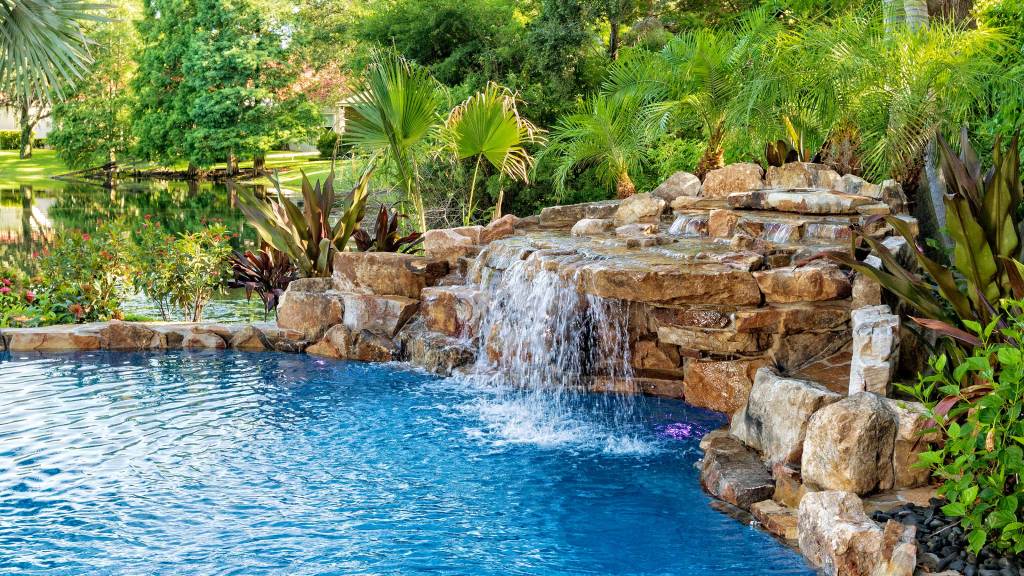
A well-designed pool can be more than a place to swim. In many custom homes, it becomes part of the landscape itself, something you notice even when no one is in the water. When a pool is designed to double as a water feature, it brings movement, sound, and visual interest to the entire outdoor space. The goal is not to hide the pool, but to make it feel intentional from every angle, whether you are floating on a raft or sitting inside with a cup of coffee, looking out the window.
This kind of design takes a bit more planning than a traditional backyard pool. It asks different questions early in the process. How will the pool look when it is not being used? What will it sound like at night? Where will the eye naturally travel when someone enters the yard or looks out from the house? With the right choices, the pool becomes a focal point that feels calm and sculptural, not just recreational.
Start with the View, Not the Swim Lane
One of the biggest mindset shifts is designing the pool as something to be seen as much as something to be used. Builders who specialize in water feature pools often start by identifying the main sightlines. These might be from a living room, a primary bedroom, a patio seating area, or even a second-story window.
Once those views are clear, the pool shape, edge details, and water movement can be planned to enhance them. Straight, formal lines tend to create a reflective, mirror-like surface that feels architectural. Softer curves feel more natural and can blend into planted areas. Neither option is better. The right choice depends on the home’s style and how structured or organic the landscape is meant to feel.
Use Water Movement Sparingly and Intentionally
When people hear “water feature,” they often imagine dramatic waterfalls or multiple jets. In reality, restraint usually creates the most elegant result. A custom pool that doubles as a water feature often relies on subtle movement rather than constant splash.
Sheer descents, narrow spillways, and gentle overflows create sound without overwhelming the space. The water should feel like it belongs there, not like it is competing for attention. Many homeowners prefer features that can be adjusted or turned off entirely, allowing the pool to shift from lively during gatherings to quiet and reflective in the evening.
Materials Matter More Than You Think
The materials surrounding and lining the pool play a huge role in whether it reads as a water feature or just a swimming pool. Stone, tile, and concrete finishes should complement the home and landscape rather than stand apart from them.
Natural stone coping, textured plaster, and muted tile colors often help the pool blend into its surroundings. Highly reflective or overly bright finishes can pull attention in ways that feel disconnected. When the materials feel cohesive, the pool surface acts like a moving mirror, reflecting sky, plants, and architecture throughout the day.
Consider Edges That Disappear
Vanishing edges, perimeter overflows, and knife-edge designs are popular for a reason. These features allow the water to visually blend into nearby surfaces or landscapes, creating the illusion that it has no boundary at all.
Even on smaller properties, a single overflow edge can dramatically change how the pool is perceived. The sound of water slipping over the edge adds atmosphere, while the visual effect keeps the pool looking polished even when no one is swimming. These details often become the defining element that elevates the pool from functional to sculptural.
Integrate Lighting for After-Dark Impact
A pool designed as a water feature should be just as compelling at night as it is during the day. Thoughtful lighting brings out texture, movement, and depth once the sun goes down. Soft underwater lights can highlight ripples, while low landscape lighting draws attention to edges and spillways.
The key is to avoid over-lighting. Gentle illumination feels intentional and calm. Harsh or uneven lighting can break the illusion and make the pool feel more like a public facility than a private retreat. When done well, the pool becomes the quiet centerpiece of the yard after dark.
Balance Function with Everyday Use
While aesthetics are important, the pool still needs to function comfortably for swimming, lounging, and maintenance. Steps, benches, and entry points should be integrated subtly so they do not disrupt the overall look.
Many custom water feature pools use wide, shallow ledges that serve as both seating and visual platforms. These areas look clean and sculptural when empty, then become social spaces when guests arrive. Equipment placement and access should also be planned carefully so mechanical elements stay out of sight.
Let the Landscape Do Some of the Work
Plants and hardscape play a supporting role in making a pool feel like a water feature. Low plantings near the water’s edge soften transitions, while taller grasses or shrubs can frame views without blocking them. Even a simple row of ornamental grasses can change how the pool surface is perceived.
The goal is not to crowd the pool, but to let it sit comfortably within the landscape. When the surrounding elements feel balanced, the pool feels like a natural extension of the outdoor environment rather than an isolated object.
A Pool That Feels Alive Year-Round
A custom pool that doubles as a water feature offers something even when swimsuits are packed away. It adds movement on windy days, reflections during quiet mornings, and sound that softens the edges of outdoor living.
By focusing on sightlines, materials, subtle water movement, and thoughtful integration, homeowners can create a pool that feels purposeful at all times. It becomes part of the home’s identity, not just a seasonal amenity. If you are looking for help with pool construction in Oklahoma City, there are contractors who can help. When designed with care, the pool is no longer just a place to swim. It is something to live with, enjoy, and admire every day of the year.