



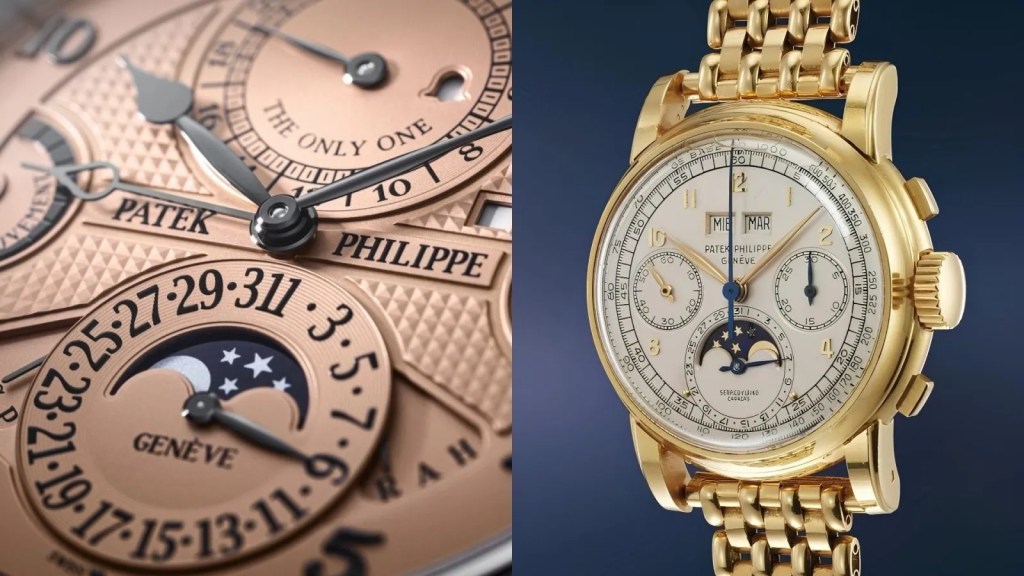
In the realm of horology, few names command as much respect, admiration, and awe as Patek Philippe. For nearly two centuries, this Genevan manufacture has stood as the bastion of traditional Swiss watchmaking, producing timepieces that are not merely instruments for telling time but heirlooms representing the pinnacle of human craftsmanship.
While trends in the luxury market ebb and flow, Patek Philippe has maintained an almost mythical status. It is a brand that transcends mere fashion, occupying a space where engineering meets art. From the wrists of royalty to the auction blocks of Geneva, where records are routinely shattered, Patek Philippe luxury timepieces represent a specific kind of quiet dominance—a whisper that screams louder than any shout.
But what exactly propels this independent, family-owned company to the very top of the watchmaking pyramid? It isn’t just about gold or diamonds; it is about a relentless pursuit of perfection that borders on obsession.
A History Written in Complications
To understand the prestige of a Patek Philippe, one must look back to its origins. Founded in 1839, the company has always been at the forefront of innovation. While many brands rely on marketing to build their image, Patek Philippe relies on its archives.
The company has been awarded over 100 patents, many of which are fundamental to modern watchmaking. They didn’t just participate in the evolution of the wristwatch; in many ways, they directed it. The winding crown, a feature we take for granted today, was pioneered by the brand’s co-founder, Jean Adrien Philippe.
However, the true heart of the brand lies in its mastery of complications. In the world of high horology, a “complication” is any feature beyond the simple display of hours and minutes. This could be a chronograph, a calendar, or a chiming mechanism. Patek Philippe luxury timepieces are renowned for housing some of the most complex movements ever conceived.
Consider the Calibre 89, created to celebrate the company’s 150th anniversary. With 33 complications and 1,728 parts, it remains one of the most complicated portable mechanical watches in existence. This dedication to pushing the boundaries of what is mechanically possible is why collectors view these watches not as accessories, but as mechanical sculptures.
The Calatrava Cross: A Symbol of Independence
In an era where luxury conglomerates absorb historic houses, Patek Philippe remains a rare exception. Since 1932, the company has been owned by the Stern family. This independence is not a trivial detail; it is the cornerstone of their philosophy.
Being family-owned grants the company a unique luxury: time. They are not beholden to shareholders demanding quarterly growth. This allows them to take the long view, investing in research and development that might not yield a return for a decade. It allows them to limit production to maintain quality, rather than expanding to meet demand—a strategy that naturally drives the scarcity and value of Patek Philippe luxury timepieces.
This autonomy also allows them to maintain the “Patek Philippe Seal.” While the Geneva Seal was long considered the gold standard for quality, Patek Philippe felt it didn’t go far enough. They created their own certification, which applies to the finished watch, not just the movement. It guarantees that every single component, from the escapement to the case polishing, meets standards that are arguably the strictest in the industry.
The Nautilus Phenomenon
No discussion of Patek Philippe is complete without addressing the elephant in the room: the Nautilus. Designed by the legendary Gérald Genta and released in 1976, the Nautilus was a gamble. It was a luxury sports watch made of steel—a material previously considered utilitarian—and priced higher than many gold watches of the time.
The gamble paid off. Today, the Nautilus (particularly the reference 5711, now discontinued) is perhaps the most coveted wristwatch on the planet. Its rounded octagonal bezel and integrated bracelet created a silhouette that is instantly recognisable.
However, the brand’s relationship with the Nautilus is complex. Thierry Stern, the current president, famously decided to discontinue the wildly popular steel 5711 because he did not want a single model to overshadow the rest of the brand’s incredible repertoire. This move demonstrated supreme confidence. It sent a message that Patek Philippe is not a “Nautilus company”; it is a manufacturer of grand complications, Calatravas, and Aquanauts. They refused to let the market dictate their identity.
Investment Value vs. Emotional Value
There is a famous slogan associated with the brand: “You never actually own a Patek Philippe. You merely look after it for the next generation.”
It is a brilliant piece of marketing, but it also touches on a truth about value. Patek Philippe luxury timepieces are among the few consumer goods that actually appreciate over time. Vintage models frequently sell for millions at auction. The Grandmaster Chime Ref. 6300A-010 sold for a staggering $31 million in 2019, making it the most expensive watch ever sold at auction at the time.
Yet, focusing solely on the monetary investment misses the point. The true value lies in the artistry. It takes nine months to make the most basic Patek Philippe movement, and over two years to produce the more complex ones. The hand-finishing—the anglage (beveling), the perlage (circular graining), the black polishing—is executed to a level that is visible only under a loupe, often on parts that the owner will never see.
This is the “stealth wealth” aspect of the brand. A platinum Patek Philippe perpetual calendar might look like a simple dress watch to the uninitiated, but to a fellow enthusiast, it represents the apex of taste and knowledge.
Preserving the Art of Handcrafts
While the movements are the engine, the exterior is the body, and Patek Philippe treats it with equal reverence. The company is a staunch defender of “Rare Handcrafts” (Hauts Artisanats).
In an age of automated manufacturing, Patek Philippe maintains a dedicated division focused on enamelling, engraving, gem-setting, and guilloché work. These are dying arts, skills that take decades to master and are at risk of being lost to history.
Each year, the brand releases a collection of one-of-a-kind pieces that showcase these techniques. These pocket watches and dome clocks feature intricate scenes depicted in cloisonné enamel or microscopic engraving. They are not commercial products in the traditional sense; they are exercises in artistic preservation. By continuing to commission this work, Patek Philippe ensures that these artisanal traditions survive for the next generation of craftsmen.
The Future of Tradition
As we look toward the future, Patek Philippe faces the challenge of staying relevant to a younger, digital-native generation without alienating its traditional base. They have navigated this slowly and carefully. They were late to Instagram, and they do not sell their watches online.
Yet, their appeal to younger demographics is undeniable. The brand has become a cultural touchstone, referenced in hip-hop lyrics and spotted on the wrists of tech moguls and NBA stars alike.
This cross-generational appeal suggests that the appreciation for true quality is not dying out. In a world of disposable technology and fast fashion, the permanence of a mechanical watch—a device powered by nothing but springs, gears, and kinetic energy—offers a profound sense of grounding.
Owning a Patek Philippe is an entry into a club that values patience over instant gratification. It is an acknowledgement that some things are worth waiting for, and that true luxury is not about the price tag, but the hands that built it.
Conserving Time
Patek Philippe luxury timepieces are more than symbols of status—they are masterpieces of human ingenuity and uncompromising craftsmanship. From the understated elegance of a Calatrava time-only watch to the complexity of a Sky Moon Tourbillon, each piece carries the legacy of over 180 years of horological excellence.
For the collector, the investor, or the dreamer, Patek Philippe remains the north star of watchmaking. It is a reminder that while time moves forward, the art of measuring it can remain timeless.