



Why spend your weekends taking care of plants that need constant attention when you could enjoy beautiful ones that are easy to look after?
At Made Minimal, we’ve travelled the world sourcing sustainable design solutions for Australian homes. We believe this same philosophy applies perfectly to outdoor spaces.
With a minimalist garden, you can cut down the hassle of gardening.
And guess what? Australian native plants make this approach even easier. They’ve been growing here for thousands of years and can handle our hot summers, soil, and unpredictable weather.
So, let’s look at the Australian natives that make it all possible.
What Makes a Garden “Minimalist” in Australia?
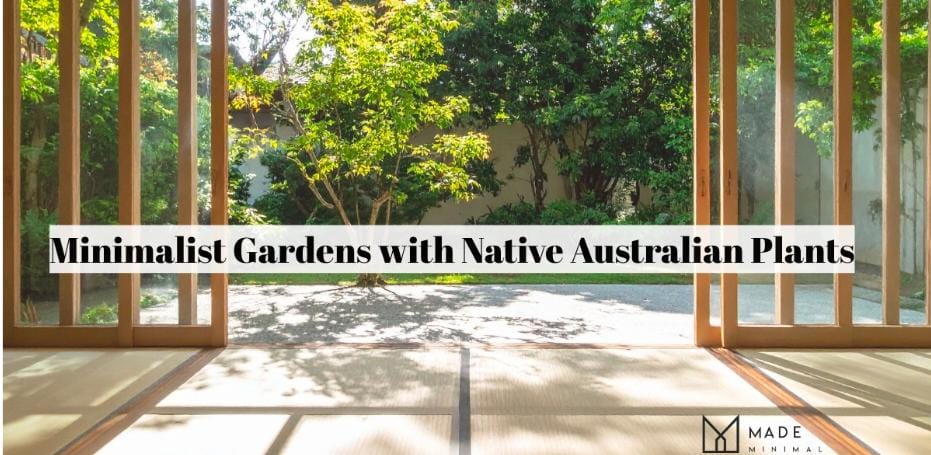
A minimalist garden in Australia is all about having just the right things that work perfectly together. It uses fewer plants and design elements, and each plant has a purpose.
Here’s what we mean:
- Form and Function: The best minimalist gardens use simple, clean shapes that look neat and organised. You might see straight pathways, square garden beds, or a round seating area.
- Textures: Different textures are what keep minimalist gardens from feeling boring. So if you’ve thought they’re too plain or boring, they probably weren’t done right.
- Repetition: Next, it uses the same plants or design elements in different spots to tie the whole garden together. They might plant the same type of native grass in three different areas, or use matching planters along the deck.
- Negative Space: Minimalist gardens focus on empty space as well as plants. Those open patches of lawn, clean gravel areas, or uncluttered deck spaces are there to give your mind a place to rest.
- Easy Care: Now, here’s the best part about Australian minimalist gardens. Using our tough native plants means less water, less pruning, and fewer problems with pests and diseases. Your water bills stay manageable too, even during those long, dry Australian summers.
Now, let’s look at which specific native plants work best for this style of gardening.
Top Australian Native Plants for Low-Maintenance Gardening
These eight native plants will give you a beautiful garden without all the hard work. Each one has its own special qualities, but they all handle Australia’s tough weather conditions really well.
1. Kangaroo Paw
These flowers are exactly what they sound like: they look just like a kangaroo’s fuzzy paw! They come in bright reds, yellows, and oranges that really catch your eye.
Once they’re settled in your garden, they’re surprisingly easy to look after. Just give them good drainage and plenty of sun, and they’ll reward you with flowers that birds can’t resist. The taller types can keep going strong for more than 20 years.
2. Dianella
If you want plants that always look neat and organised, these are perfect for you. Dianella’s long, ribbon-like leaves will create beautiful structure in your garden without ever looking messy.
Plus, the blue-green leaves look classy all year round, and in spring, you get lovely blue flowers followed by berries that local birds really enjoy.
3. Lomandra
Lomandra are architectural grass-like plants that form beautiful fountain shapes (and they never need trimming or clipping!).
What’s more impressive is that they handle everything from wet spots to bone-dry areas, and their symmetrical growth makes them perfect for creating clean lines in minimalist designs. Also, they produce fragrant cream flowers that native wildlife adores.
4. Grevillea
The low-growing Grevillea types spread out to create fantastic ground cover that can help keep weeds away. Throughout most of the year, they produce unique spider-like flowers that are absolutely loved by honeyeaters and other nectar-feeding birds.
They can also survive in very dry conditions and poor soil where many other plants would give up.
5. Banksia
Now, if you’re looking for something that really makes a statement in your garden, we highly recommend Banksia. Their distinctive flower spikes and interesting seed cones create amazing focal points that catch everyone’s attention.
Also, they actually prefer poor, sandy soil that would be challenging for many other plants.
Now, if you’ve made your picks, it’s time to arrange them in a way that looks appealing.
Designing Your Minimalist Native Garden
You’ve chosen your plants, now comes the exciting part. You know that satisfying feeling when everything just clicks into place? That’s what you want to achieve with a minimalist garden. Here’s where to start:
Repeat Plant Forms for Natural Flow
The easiest way to get a pro-looking garden is to repeat the same plants in different spots. For example, instead of planting one Lomandra here and one Dianella there, group three Lomandras near your entrance and another cluster by your back door.
This repetition creates a natural rhythm that guides your eye around the garden and makes everything feel connected.
Leave Space for Your Garden to Breathe
Here’s a reminder (and for those who skipped here): Don’t try to fill every single space with plants. Leave those clean gravel paths, open patches of mulch, or simple timber decks for your eyes to rest on.
Fun fact: These breathing spaces can also trick your eyes into thinking your garden looks bigger than it really is.
Use Natural Materials That Belong
Finally, the materials you choose for paths, borders, and mulch should feel like they belong in the Australian landscape. River stones, decomposed granite, and chunky bark mulch are some great choices because they echo textures found in nature.
Grow a Garden That Gives Back with Native Plants
This is gardening with real intention. You get a low-stress, low-waste minimalist garden with Australian native plants that’s incredibly rewarding. Every single plant also gives something back: oxygen, bird habitat, soil stability, and comfort.
So, ready to create your own minimalist native sanctuary? If you’re interested, then visit Made Minimal today to add minimalism to your Australian home.