



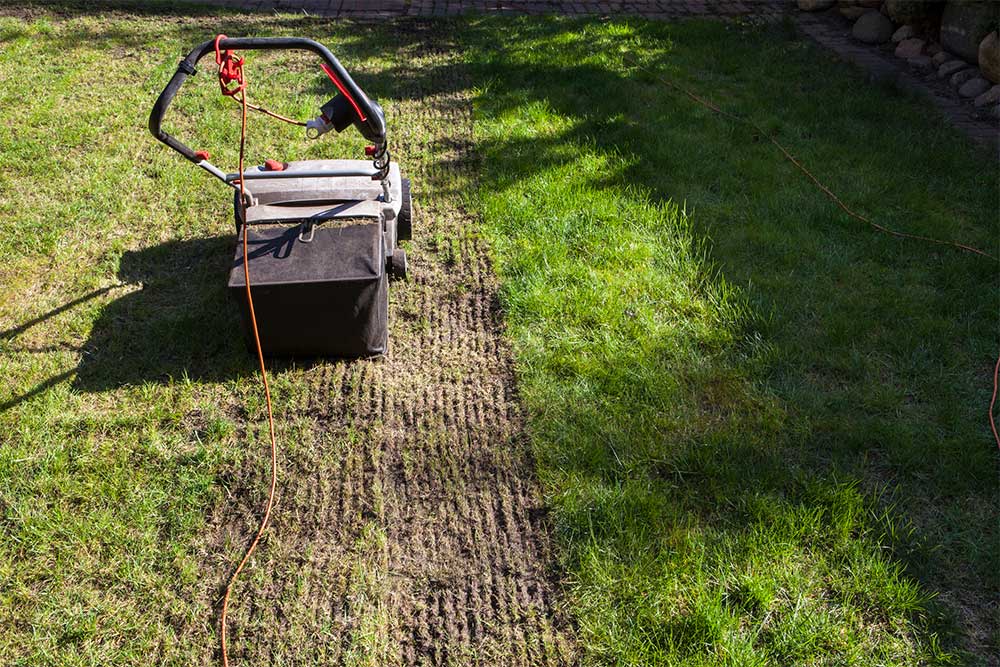
Who doesn’t like a verdant, green lawn in the backyard? While everyone aspires to this, only a few enjoy such perfect beauty. Why does this happen? It draws attention to the way you care for your lawn. Replenishing soil, fertilization, aeration, and mowing are major maintenance tasks. In between these, other things also need to be done to keep your lawn looking vibrant, such as dethatching. It involves removing thatch or a portion of the organic material that collects between the grass blades and the soil. Thatch can consist of roots and dead grass. A lawn grows lush and attractive when it has just a thin layer of thatch. It acts as a protective layer for roots while providing insulation. However, a thick layer blocks the passage of nutrients, water, and air into the soil.
Since this is a slightly arduous job, you can hire a lawn care agency like JHL Turf Pros for help. They handle all types of lawn maintenance tasks. Therefore, you can speak to them. Before that, let’s understand what this process entails and the benefits it offers.
Dethatching the lawn
Experts can detect the issue by tracking the signs. Due to excessive thatch, the lawn can develop pools of water that may not infiltrate the soil and instead flow off. The area can become patchy and uneven. Despite regular watering, the lawn can start looking dry or feel spongy. You may also notice pests and diseases. How do you determine if thatch buildup is the reason behind your lawn’s waning beauty? You can simply insert a screwdriver into the soil. If it doesn’t go in smoothly, there is a job to be done. It’s better not to involve yourself, especially if the thatch is two inches thick. Let professionals deal with it.
They generally use rakes for small buildups or small lawns. However, larger areas or deeper thatch problems may require more powerful lawn equipment. After using a rake or a machine, the lawn may appear rough. They will clear debris, sprinkle water on the lawn, and may overseed bare spots. For this type of lawn job, timing is critical. Generally, it should be done during the grass’s peak growth season. Considering this, lawns with cool-season grasses can be worked on during early spring or early fall. For warm-season grasses, late spring or early summer can be more suitable. Processes like this should be carried out every 2 to 3 years, but lawns that suffer from heavy thatch buildup may need more frequent help.
Reaping the benefits of dethatching
The obvious advantage is the lawn’s increased aesthetic appeal. But it doesn’t stop there. As mentioned, excessive thatch accumulation can hinder grass roots from absorbing nutrients and water, affecting the lawn’s health. However, dethatching can improve this, resulting in a healthier lawn. Risks like drought and others can be avoided. Plus, it can reduce the risk of pest infestations and lawn diseases.
Some homeowners confuse dethatching with core aeration, though these two are different yet equally important tasks. Each provides unique benefits for your lawn. If you hire professionals, they can explain which technique is most appropriate for your lawn depending on the nature of the problem.